
How Does Jewelry Store Insurance Work?
Jewelry store insurance works by protecting your business against losses involving your inventory, property, customers, and daily operations. It bundles several specialized coverages—most importantly Jewelers Block Insurance—to safeguard high-value items like diamonds, gemstones, watches, and precious metals. When a covered loss occurs (such as theft, burglary, fire, or damage), you submit a claim, and the insurance company reimburses you for the value of the lost or damaged items, up to your policy limits.
Detailed Breakdown: How It Works Step-by-Step
1. You Choose the Right Coverage Types
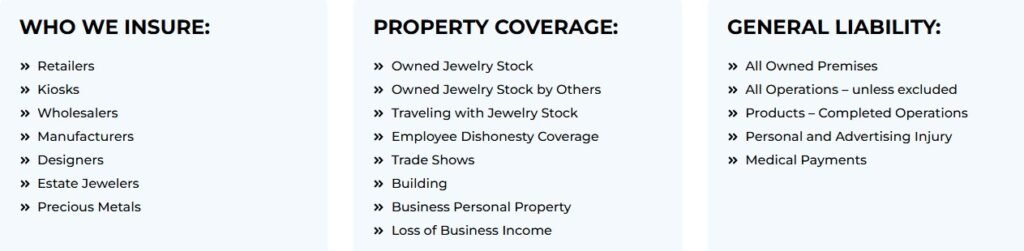
A complete jewelry store insurance program normally includes:
Jewelers Block Insurance – covers inventory on premises, in transit, at trade shows, and sometimes in the custody of customers or vendors.
General Liability – covers customer injuries or property damage.
Business Property Insurance – protects showcases, furniture, equipment, and the building (if owned).
Business Interruption – covers lost income after a covered event.
Workers’ Compensation – protects employees.
Cyber Liability – crucial for POS systems, appraisals, customer records, and payment processing.
2. Your Inventory and Security Measures Are Evaluated
Because jewelry stores carry very high-value merchandise, insurers require:
UL-rated safes or vaults
Alarm systems
Cameras and security protocols
Closing procedures
Inventory records and appraisals
Better security → lower premiums.
3. You Pay a Monthly or Annual Premium
Rates depend on:
Total inventory value
Location and crime rate
Security systems
Type of jewelry (e.g., loose stones vs. watches)
Past claims history
Whether items are frequently shipped or transported
4. A Loss Occurs
Covered losses may include:
Theft or robbery
Burglary
Employee dishonesty
Fire or smoke damage
Water damage
Damage during shipping
Mysterious disappearance (depending on policy)
5. You File a Claim
You provide:
Inventory records
Proof of loss
Police reports (for theft)
Photos, receipts, or appraisal documentation
The insurer reviews the claim and determines coverage.
6. You Receive Reimbursement
If approved, the insurer pays:
The cost to replace or repair items
The value of stolen/damaged merchandise
Additional expenses like lost income (if business interruption is included)
In Simple Terms
Jewelry store insurance works by covering the financial risks of running a high-value, high-exposure business. When something goes wrong—whether theft, fire, or damage—the policy steps in to restore your business financially so you can reopen quickly and protect your bottom line.